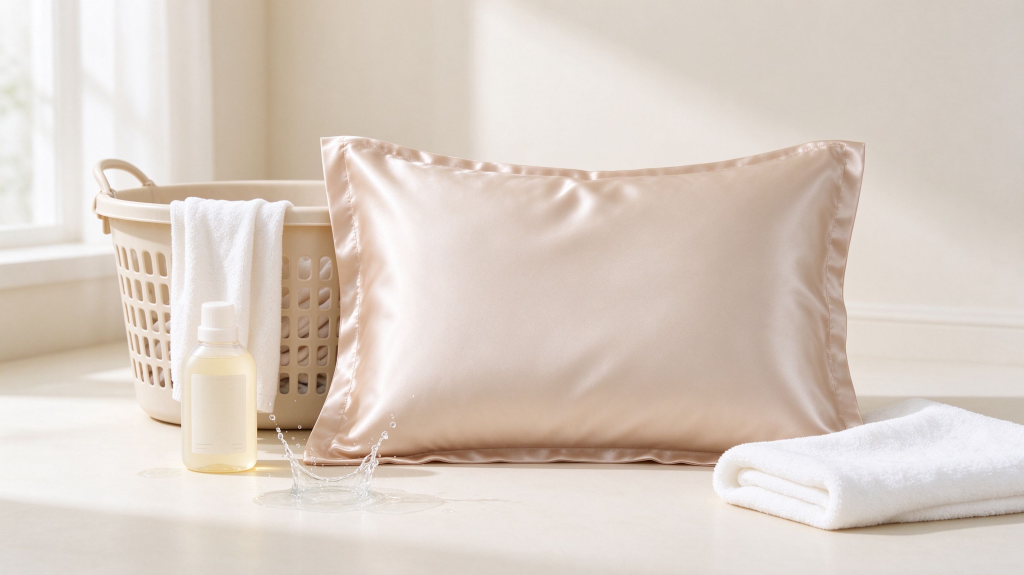
If you’ve invested in a satin pillowcase for your hair and skin, the last thing you want is to ruin it after just one wash. Satin is delicate, and the wrong washing routine can leave it dull, snagged, stretched, or scratchy. Many people make simple laundry mistakes that destroy the smooth surface that makes satin so popular for curly hair, frizz control, and skincare.
Satin is not silk, which is a common mix-up. Most affordable satin pillowcases are made of polyester satin. While it is more durable than real silk, it still needs gentle handling to keep its glossy, low-friction finish. Follow these steps to safely clean your satin pillowcase and keep it looking and feeling new for months.
How Often Should You Wash a Satin Pillowcase?
For most people, once every 3 to 7 days works best. Your pillowcase collects oil from your hair, skincare serums, sunscreen, sweat, and dust. If you wear heavy hair oil, sleep with makeup, or have acne-prone skin, aim for every 3–4 days. Waiting too long will build up residue that can clog pores and weigh down your hair.
Pre-Wash Prep (Critical Step)
- Always turn the satin pillowcase inside out. This protects the outer glossy surface from rubbing against other clothes.
- Close any zipper or envelope closure fully.
- Check for loose threads and snags. Tiny loose threads can catch in the washer and tear the fabric.
- Separate it from rough laundry: jeans, towels, hoodies with zippers are the biggest risk for snags. Wash satin pillowcases with other soft, delicate items only.
- Put it inside a mesh laundry bag. This is the single easiest way to prevent damage in the washing machine.
Washing Machine Instructions
- Use cold water only. Hot water breaks down satin fibers and causes fading and shrinkage.
- Choose the delicate / gentle cycle with low spin speed.
- Detergent: Use a mild, fragrance-free liquid detergent. Skip powder detergent, bleach, fabric softener, and dryer sheets.
Fabric softener coats the satin surface and kills the slippery anti-frizz effect you bought it for. Bleach will yellow and weaken the fabric permanently.
Hand Washing Method (Best for Extra Protection)
If you want maximum longevity, hand wash is ideal.
- Fill a basin with cool water and a tiny amount of mild detergent.
- Swish the pillowcase gently in the soapy water for 1–2 minutes. Do not scrub or twist.
- Rinse completely with cold water until there are no soap bubbles left. Soap residue will make satin feel sticky and dull.
Drying Rules You Must Follow
❌ Do NOT put satin pillowcases in the dryer on high heat. High heat melts polyester satin fibers. ✅ The safest option: Hang dry in cool, shaded area. Keep away from direct sunlight, which fades satin quickly. ✅ If you must use a dryer: Only use the lowest heat / air-fluff setting, and remove it while it is still slightly damp.
How to Remove Wrinkles
Satin wrinkles easily, but high heat is dangerous.
- Option 1: Lightly mist with cool water and hang. Wrinkles will relax on their own.
- Option 2: Iron on the lowest heat setting, iron on the reverse side only. Never iron directly on the glossy satin face.
Common Mistakes to Avoid
- Washing with hot water
- Using bleach, oxy-clean, fabric softener, dryer sheets
- Overloading the washer
- Leaving it crumpled wet in the washing machine for hours
- Hanging in direct sun
Final Tip
A well-cared satin pillowcase will keep protecting your hair from friction and cut down bedhead and frizz over time. Pair it with a consistent night hair routine, and you will notice softer, less tangled hair over time. Shop our satin pillowcases for curly hair to start your low-friction nighttime hair care routine.